Sourcing ceramic moka cups wholesale involves more than choosing an attractive design. Buyers need to assess the cup style, capacity, dimensions, material, finish, and matching accessories against their target customers and sales channels.
A moka coffee cup is intended for serving coffee, while a moka pot is the equipment used to brew it. Keeping these product types separate is important when selecting products and preparing wholesale listings. This checklist covers the main details to confirm before placing a bulk order.
Identify the Right Moka Coffee Cup Style
Start by defining the product you actually need. A moka coffee cup is generally a small coffee-serving cup associated with coffee prepared in a moka pot. It is different from the pot itself and should not be described as brewing equipment.
Moka Cups vs. Regular Coffee Cups
Moka cups are often selected for a specific coffee-serving presentation. Regular coffee cups and mugs cover a wider range of serving occasions and may have different proportions, capacities, and handle designs.
The distinction is mainly about intended use and product positioning. There is no single universal shape that defines every moka cup, so buyers should assess the actual product rather than rely on its name alone.
Individual Cups or Cup-and-Saucer Sets?
A ceramic cup and saucer set provides a coordinated serving format, while individual cups offer more flexibility for standalone sales and replacement demand.
Buyers can also consider broader coffee sets that combine cups with other ceramic pieces. Before ordering, confirm exactly what is included in each SKU. Product photographs may show accessories that are not part of the quoted configuration.
When comparing wholesale ceramic coffee cups, confirm the product’s intended use, dimensions, and set contents.
Choose the Right Cup Capacity and Dimensions
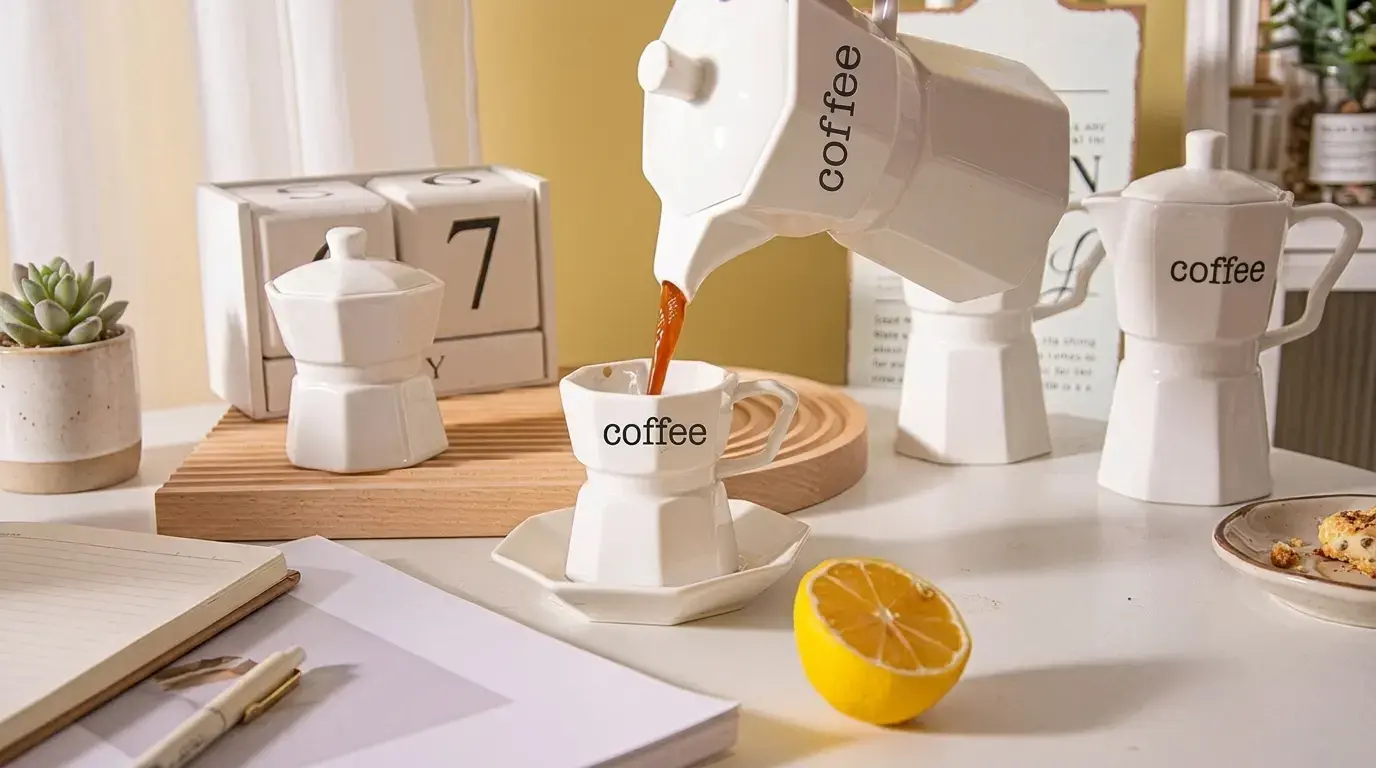
Reviewing ceramic coffee cup dimensions is essential before confirming a wholesale order. Capacity and dimensions affect how a cup fits the intended serving occasion, how it looks alongside other products, and how it is packaged. Do not select a cup based on appearance alone.
Define the Required Capacity
First, identify the serving size your customers expect. A cup intended for a small coffee serving may require a different capacity from a general-purpose coffee cup.
Ask the supplier to confirm:
- Nominal capacity
- Usable capacity, if different
- How capacity is measured
- Whether the stated value refers to one cup or a complete set
Do not assume that all products described as moka cups share the same capacity. If your business serves several customer segments, compare the required capacity with the preferences of each target market.
Check the Key Dimensions
For accurate product selection, request the following measurements:
| Measurement | Why it matters |
|---|---|
| Cup height | Determines the cup’s overall proportions |
| Rim diameter | Affects the opening and serving presentation |
| Base diameter | Helps assess stability and packaging fit |
| Overall width | Includes the cup body and, where specified, handle |
| Handle dimensions | Helps buyers assess grip space and design |
| Saucer dimensions | Important when purchasing a matching set |
These details are also relevant when planning product photography, retail display, and packaging.
Confirm Measurement Consistency Before Ordering
Use one agreed measurement unit across product specifications, drawings, samples, and purchase documents. Confirm whether dimensions refer to the cup alone or to a cup-and-saucer combination.
Evaluate Ceramic Material and Surface Finish
Material and finish influence the product’s appearance, handling, and suitability for the intended collection. Buyers should request product-specific information rather than infer material properties from photographs.
Review the Ceramic Body
Confirm the material description for the exact SKU. If your product range includes different ceramic categories, make sure the supplier identifies the material accurately rather than using broad terms interchangeably.
Also review the cup’s weight, wall thickness, shape, and overall finish through a physical sample. These details help buyers assess whether the product matches their desired positioning.
Inspect the Glaze and Surface
Check the following details on the sample:
- Glossy or matte finish: Confirm that the surface appearance matches the approved design.
- Color consistency: Compare the sample with the agreed color reference.
- Surface condition: Look for visible pinholes, uneven glaze, scratches, or other defects.
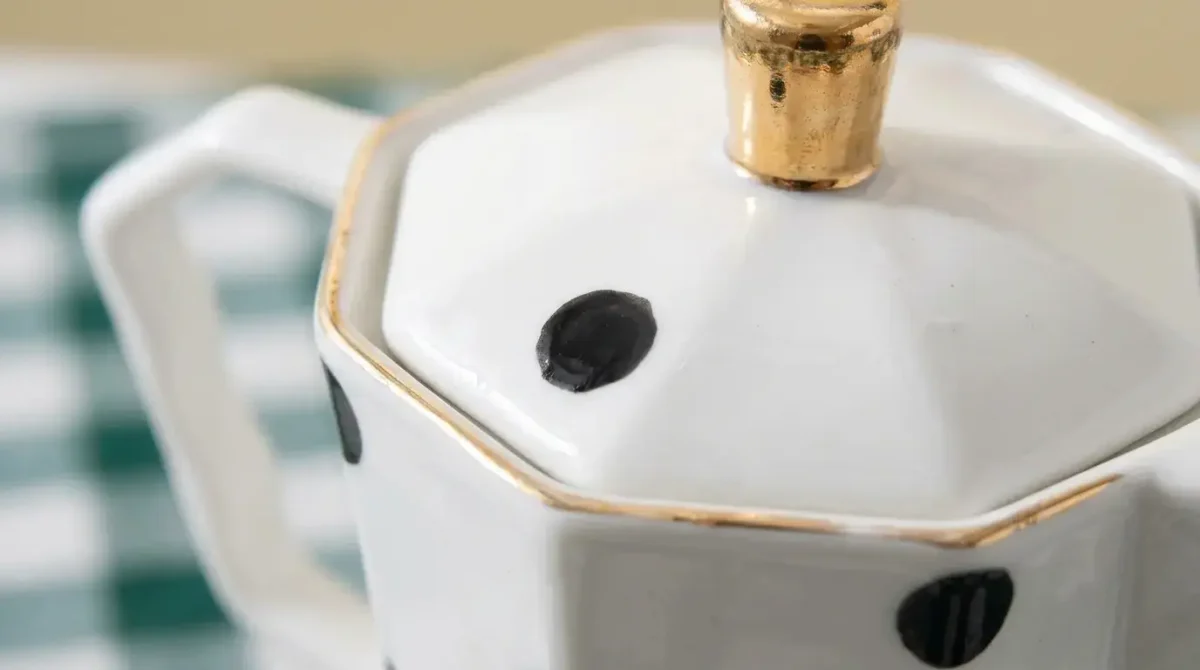
- Decorative details: Check whether patterns, printed elements, or metallic accents are applied consistently.
If the product is intended for food contact, request the relevant product documentation and confirm that it applies to the specific item and target market. Do not assume compliance from a general material description.
Select a Design That Fits Your Market
The right design depends on how the product will be sold. A retail collection, hospitality range, and private-label coffee set may require different visual approaches.
Cup Shape and Handle Design
Compare the cup’s body proportions, rim, base, and handle as one design. A handle should provide suitable space for the intended use, while the overall shape should remain consistent with the style of the collection.
Request clear product photographs or samples from multiple angles. A front-facing image alone may not show the handle shape, base profile, or rim details.
Colors, Patterns, and Decorative Details
Consider whether the product should use a simple, repeatable color scheme or a more distinctive decorative design.
Common design points to confirm include:
- Solid colors or multi-color combinations
- Printed patterns or decorative motifs
- Glossy or matte glaze
- Contrasting handles or rims
- Special decorative accents
For wholesale orders, confirm the approved color and pattern references before production. Special finishes and decorative details may require additional feasibility checks.
Customization for Private Labels
For buyers developing custom ceramic coffee cups, discuss the customization scope before finalizing the order. Depending on the product and manufacturing feasibility, this may include shape, color, pattern, logo, and packaging.
Confirm which elements can be customized on the selected SKU, whether a sample or design approval is required, and whether the final production specification records every approved detail.
Decide Whether Matching Accessories Are Necessary
A moka cup can be purchased individually or as part of a coordinated ceramic collection. The right configuration depends on the channel, price positioning, and how customers are expected to use or display the products.
| Product configuration | Buyer consideration |
|---|---|
| Individual moka cup | Standalone sales or replacement demand |
| Cup-and-saucer set | Coordinated serving and retail presentation |
| Coffee cup and pot set | A more complete coffee-serving collection |
| Set with creamer and sugar bowl | Additional pieces for coordinated tabletop presentation |
Check Design Consistency Across Components
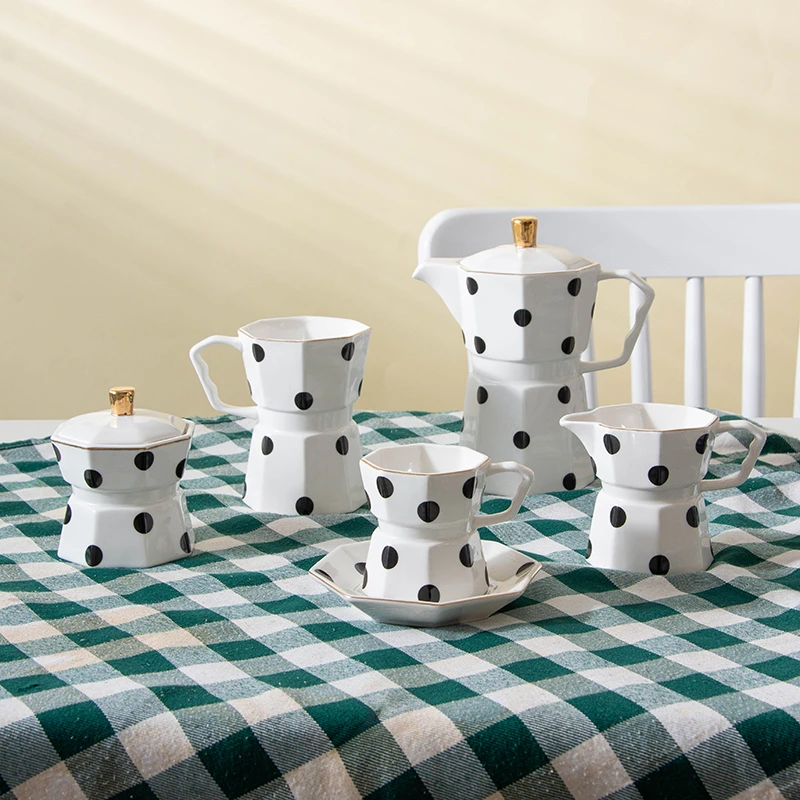
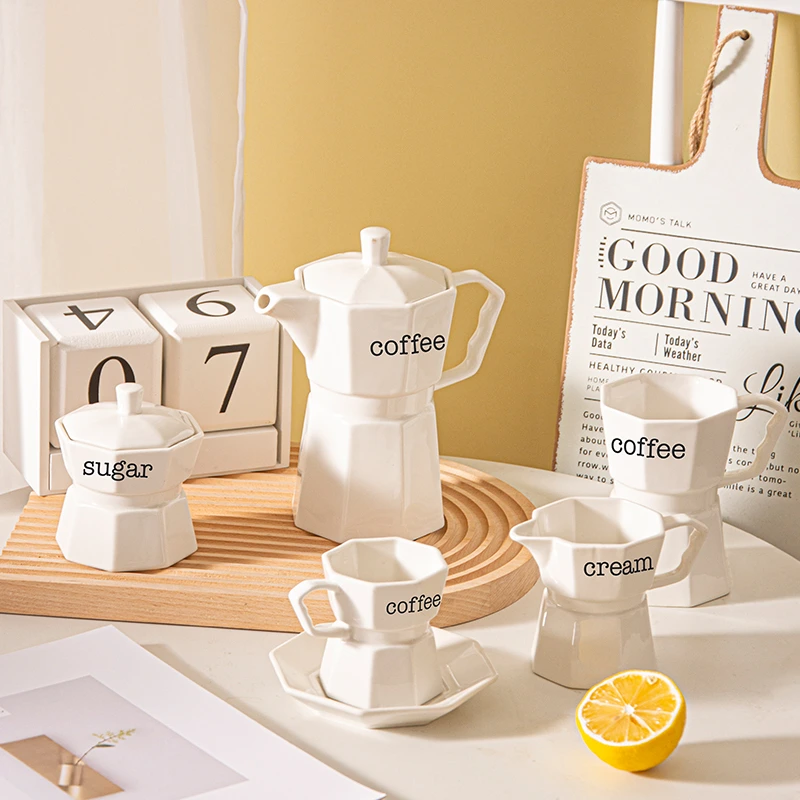
When purchasing a set, compare the cup, saucer, coffee pot, creamer, and sugar bowl as a complete collection.
Check that the colors, patterns, glaze, and decorative details are consistent. Also verify that the cup fits its saucer and that each component has its own clearly recorded dimensions.
Here is an example of a coordinated product configuration from Kedali’s wholesale ceramic moka coffee set that includes multiple ceramic coffee-service components. Buyers can use the product page to review the listed set components and assess whether this type of assortment fits their product range.

Confirm Set Contents and Packaging
Before ordering, request a written component list. Confirm the quantity of each item per set, whether accessories shown in photographs are included, and how the products are packed.
Do not assume that products with similar photographs have identical configurations. The quotation, product specification, and approved sample should all refer to the same set composition.
Final Checklist Before Placing a Wholesale Order
Use this checklist to organize the final product review:
- Confirm the intended cup style and application.
- Define the required cup capacity.
- Verify individual cup dimensions and measurement units.
- Confirm the ceramic material and surface finish.
- Approve colors, patterns, and decorative details.
- Check handle design and cup proportions.
- Confirm whether matching saucers or accessories are included.
- Review the physical sample against the written specifications.
- Confirm packaging, MOQ, and customization requirements.
- Ensure the quotation and purchase documents reflect the approved configuration.
A clear specification reduces ambiguity between the buyer, supplier, and production team. For repeat orders, retain the approved sample, product drawings, and final specification as references.
Conclusión
Choosing the right ceramic moka cup for wholesale requires a clear view of the intended serving use, capacity, dimensions, finish, design, and accessory requirements. Buyers should confirm each detail against the target market and the actual product configuration before committing to bulk production.
If you are comparing cup styles or planning a coordinated coffee collection, explore Kedali’s wholesale ceramic cups and review the available product options before finalizing your selection.
Preguntas frecuentes
What is the difference between a moka cup and an espresso cup?
The terms can overlap in product listings, but they describe a serving purpose rather than one universally fixed cup specification. Buyers should compare the actual capacity, dimensions, shape, and intended use instead of relying on the product name alone.
What dimensions should buyers check when sourcing ceramic moka cups wholesale?
At minimum, confirm cup height, rim diameter, base diameter, overall width, and handle dimensions. If purchasing a cup-and-saucer set, request the saucer dimensions separately. Also confirm the measurement units and whether listed dimensions refer to individual pieces or the complete set.
Should wholesale buyers purchase moka cups with matching saucers?
It depends on the target channel and product positioning. Individual cups may suit standalone sales or replacement demand, while cup-and-saucer sets offer a coordinated serving format. Buyers should compare the additional cost, packaging requirements, and expected customer preference before choosing.