Choosing the right ceramic mug size is more important than it may seem for retailers, wholesalers, and private label brands. Capacity affects how consumers use a mug, which beverages it suits, how the product is positioned, and even how efficiently it can be shipped and stored.
The most common comparison is between 8 oz, 10 oz, 12 oz, 14 oz, and 16 oz ceramic mugs. However, there is no single size that is ideal for every drinking occasion.
For businesses developing a керамическая кружка product line, the more useful question is therefore not simply “What is the standard mug size?” but “Which size covers the widest range of consumer needs?” Follow Kedali’s step to find it out.
What Are the Most Common Ceramic Mug Sizes from 8oz to 16oz?
The 8–16 oz range covers several common ceramic mug formats, from compact cups to large everyday mugs.
| Size | Typical Positioning | Common Uses |
|---|---|---|
| 8 oz | Small / specialty | Espresso, small coffee, tea |
| 10 oz | Compact everyday | Coffee, tea, office |
| 12 oz | Medium / versatile | Coffee, latte, tea, everyday use |
| 14 oz | Большой | Large coffee, casual beverages |
| 16 oz | Extra-large | Large coffee, cold drinks, lifestyle use |
For business buyers, understanding this positioning helps determine whether a size should become a core SKU or a supporting product.
Does Nominal Mug Capacity Equal the Actual Drinking Capacity?
Not necessarily. An 12 oz ceramic mug may have a maximum internal capacity of 12 oz, but consumers do not necessarily fill it completely to the rim.
A practical drinking level needs room for coffee foam, tea movement, or simply comfortable handling. Mug shape also matters. A wide 12 oz mug can provide a very different drinking experience from a tall, narrow mug with the same nominal capacity.
This means capacity should be evaluated together with:
- Usable drinking volume
- Headspace
- Mug opening
- Height and diameter
- Beverage type
- Overall shape
Mug capacity is a useful starting point, but the actual drinking experience depends on how that capacity is designed into the product.


Which Ceramic Mug Size Is Best for Different Drinking Occasions?
Consumer preference becomes clearer when ceramic mug sizes are compared by actual use rather than in isolation. Coffee, tea, office use, and lifestyle products each create different requirements for capacity.
What Ceramic Mug Size Works Best for Coffee and Tea?
Coffee and tea represent some of the broadest everyday applications for ceramic mugs, but consumers do not always drink them in the same quantities.
An 8 oz ceramic mug works well for smaller servings and more concentrated drinks. It can suit espresso-based beverages, smaller coffees, and modest tea servings. Its compact proportions can also support a more refined or specialty-oriented product position.
A 10 oz ceramic mug provides more room for everyday coffee without becoming particularly large. It is a practical middle ground for consumers who want a relatively compact mug for coffee or tea.
A 12 oz ceramic mug offers greater flexibility. It can accommodate everyday coffee, milk-based coffee drinks, and a wider range of tea servings without feeling excessively large. This makes it particularly useful for products designed around general household consumption.
Moving to 14 oz and 16 oz, the emphasis shifts toward larger servings. These sizes can suit consumers who prefer a larger coffee or beverage and want to reduce the need for refills. However, the additional capacity also means a larger and potentially heavier product.
8–10 oz is better suited to smaller servings and specialty use, 10–12 oz works well for everyday coffee and tea, while 14–16 oz targets consumers who prefer larger beverages. Among these options, 12 oz provides one of the broadest applications.

Which Ceramic Mug Size Is Better for Office and Everyday Use?
For office and household use, capacity is only part of the decision. Consumers also care about how easy the mug is to carry, hold, clean, and place on a desk or kitchen surface.
Smaller mugs such as 8 oz are compact and relatively easy to handle, but they may require more frequent refills. This can be less convenient for someone drinking coffee throughout a workday.
At the other end, 14–16 oz mugs reduce the need for refilling but take up more space and can feel heavier when full. Their larger footprint may also be less convenient on crowded office desks.
The 10–12 oz range provides a practical middle ground. It offers enough capacity for a normal serving while remaining manageable for repeated daily use.
For office and everyday-use ceramic mugs, 10–12 oz offers a strong balance between capacity, convenience, weight, and handling.

What Ceramic Mug Size Works Best for Gifts and Lifestyle Collections?
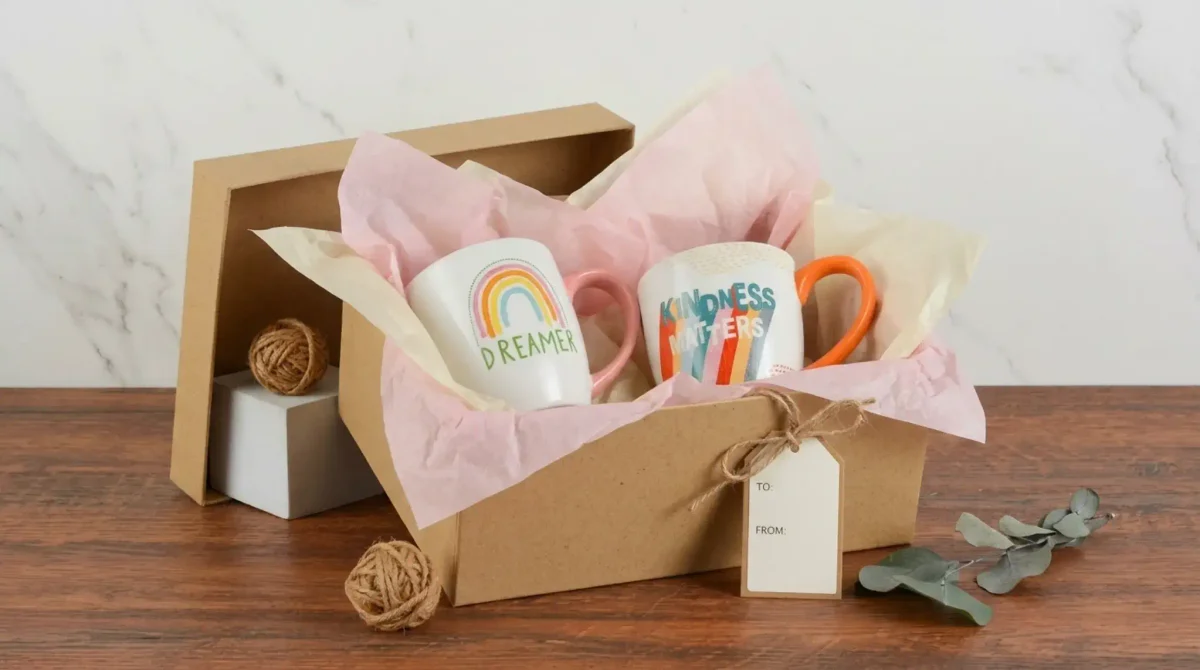
Gift and lifestyle mugs are influenced by more than beverage capacity. Buyers may select them based on appearance, proportions, handle design, color, and the overall feeling of the product.
An 8–10 oz mug can create a compact and refined appearance, making it suitable for smaller gift sets or products designed around tea and specialty beverages.
A 12 oz mug provides a versatile foundation for lifestyle collections because it remains practical for everyday use while offering enough surface area for patterns, logos, illustrations, or other decorative elements.
A 14–16 oz mug creates a stronger large-mug identity. It can work well for products positioned around comfort, relaxation, generous servings, or casual home use. However, the larger size also affects product weight and packaging dimensions.
For gifts and lifestyle collections, the right capacity should support the design concept, intended use, and brand positioning rather than simply maximize volume.
Which Ceramic Mug Size Has the Broadest Consumer Appeal?
Looking across the main use cases shows how each capacity fits a different part of the market.
| Drinking Occasion | Best-Fit Size | Main Reason |
|---|---|---|
| Specialty / small coffee | 8–10 oz | Smaller servings |
| Everyday coffee | 10–12 oz | Balanced capacity |
| Чай | 8–12 oz | Flexible serving sizes |
| Office use | 10–12 oz | Practical everyday capacity |
| Large coffee / beverages | 14–16 oz | Larger servings |
| Lifestyle / gifts | 10–14 oz | Balance of design and usability |
The important point is that the most useful size is not necessarily the one that serves the largest volume. It is the one that fits the greatest number of common situations without creating unnecessary compromises in handling or logistics.
12 oz ceramic mugs provide broad coverage across mainstream drinking occasions. Smaller 8–10 oz mugs and larger 14–16 oz mugs are better positioned as supporting SKUs for more specific consumer preferences.
How Does Ceramic Mug Size Affect Retail Product Decisions?
Once consumer use cases are understood, the next question is how those preferences should translate into a retail product range.
Which Ceramic Mug Size Should Be the Core Retail SKU?
For a retailer launching a new ceramic mug collection, carrying every possible capacity can create unnecessary SKU complexity.
An 8–10 oz mug is more targeted toward smaller servings, specialty beverages, and compact product positioning. It can be a strong choice when the collection has a specific niche rather than a broad everyday focus.
A 12 oz mug has a wider range of applications. It can serve coffee and tea drinkers, work in household and office settings, and support both basic and lifestyle-oriented designs.
A 14–16 oz mug can provide differentiation for consumers specifically looking for larger capacity, but it is less universally applicable.
If broad market coverage is the priority, 12 oz is a strong candidate for the core retail SKU. Smaller and larger capacities can then be added based on actual demand.
Should Retailers Stock One Ceramic Mug Size or Multiple Sizes?
The right approach depends on the maturity and positioning of the product line.
For a new product, starting with one versatile size can simplify inventory and make demand easier to evaluate. A 12 oz ceramic mug is a practical starting point when there is no strong evidence that the target market prefers a particular capacity.
A two-size range can provide more choice without creating excessive SKU complexity. For example, a retailer could combine a medium core size with either a smaller or larger option.
More established brands can use multiple capacities to create clear product segmentation. In this case, each size should have a defined purpose rather than simply duplicating the same design at different capacities.
Retailers should build mug sizes around distinct consumer needs, not add sizes simply to increase product variety.
How Should Brands Choose the Right Ceramic Mug Size for Their Product Line?
A useful way to select capacity is to begin with the product’s intended market position.
| Product Positioning | Recommended Size |
|---|---|
| Specialty coffee | 8–12 oz |
| Everyday household | 10–12 oz |
| Mainstream retail | 12 oz |
| Lifestyle / premium | 12–14 oz |
| Large beverage positioning | 14–16 oz |
| Gift sets | 8–12 oz |
This approach prevents brands from choosing a mug size simply because it is common. Instead, capacity becomes part of the product strategy.
What Is the Best Ceramic Mug Size for Retail and E-Commerce?
For retail and e-commerce sellers, the best size is ultimately the one that combines broad consumer demand with manageable product and logistics requirements.
Is 12 oz the Best Ceramic Mug Size for Most Retail Products?
The comparison is relatively straightforward:
- 8–10 oz: better for smaller servings and specialty positioning.
- 12 oz: suitable for the broadest range of everyday drinking occasions.
- 14–16 oz: better for large-serving and lifestyle-oriented products.
This does not mean every consumer prefers 12 oz. Rather, its advantage is the number of situations it can accommodate without becoming noticeably small or excessively large.
For a оптовый поставщик керамических кружек working with retailers, this makes 12 oz a logical size to consider when developing a general-purpose collection.
12 oz is a strong starting point for most broadly positioned retail ceramic mug products, while other sizes should be added when there is a clear market or product-positioning reason.
How Can Retailers Build a Ceramic Mug Size Range?
Retailers can structure their range according to how much variety their market requires.
Single-SKU strategy:
Start with 12 oz when the objective is to test a broadly applicable product.
Two-SKU strategy:
Combine a core size with a more specific alternative, such as 10 oz + 14 oz или 12 oz + 16 oz.
Multi-SKU strategy:
Использование 8/10 oz + 12 oz + 14/16 oz to cover smaller, mainstream, and larger-serving preferences.
The key is to give each size a clear role. If several capacities serve exactly the same consumer need, the additional SKUs may create inventory complexity without adding meaningful product value.
A practical ceramic mug range should be built around one core size plus targeted supporting sizes, with expansion driven by consumer demand and product positioning.
Заключение
Choosing a ceramic mug size is ultimately a matter of matching capacity with consumer behavior.
8–10 oz mugs work better for smaller servings, specialty beverages, and compact product concepts. 10–12 oz mugs are more suitable for everyday coffee, tea, office, and household use. 14–16 oz mugs address consumers who specifically prefer larger beverages and can also support lifestyle-oriented positioning.
Among these options, 12 oz ceramic mugs offer the broadest combination of drinking occasions and everyday usability, making them a strong starting point for retailers and brands looking for a core SKU.
However, the best product range does not necessarily contain only one size. A more effective approach is to establish one versatile core capacity and then add smaller or larger sizes when they serve a clearly different consumer need.
For B2B buyers, the final decision should therefore consider not only ceramic mug size, but also product design, ergonomics, production cost, packaging, shipping efficiency, and the intended market position. This creates a more commercially viable SKU strategy than choosing capacity based on size alone.
О Кедали
Кедали - это профессиональный производитель керамической посуды serving global brands, wholesalers, retailers, and distributors with reliable B2B solutions. With a customer-focused approach, Kedali provides OEM and ODM ceramic product customization, covering product shapes, sizes, colors, patterns, logos, and packaging.
Our ceramic products are manufactured under strict quality control procedures to ensure consistent quality and reliable performance, with relevant certifications to support international market requirements. From product development and customization to bulk production, Kedali works closely with B2B customers to deliver practical ceramic kitchenware solutions tailored to their markets.