When sourcing ceramic moka mugs wholesale, retail buyers should look beyond attractive designs. A suitable mug must appeal to the intended customer, support the target retail price, provide a practical drinking experience, and complement the existing product assortment.
Como um ceramic coffee & tea set manufacturer, we are pointing out that the goal is not simply to offer more mug designs, but to select products that serve distinct customer needs and contribute to a cohesive retail collection.
What Makes a Ceramic Moka Mug Different from a Regular Mug?
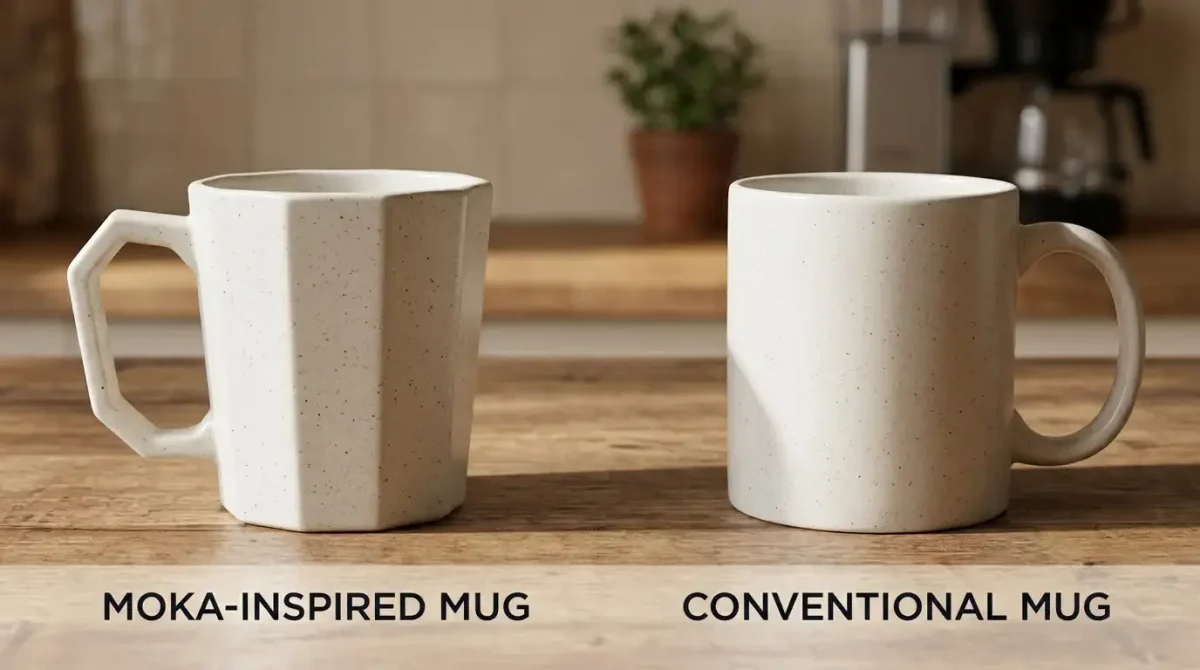
A ceramic moka mug may feature geometric silhouettes, faceted surfaces, retro details, or decorative elements inspired by traditional Italian moka pots. These characteristics can give it a distinctive identity compared with conventional cylindrical mugs.
However, Moka is not a standardized mug classification. Some products use the term to describe a coffee-inspired design, while others use it as a collection name. For example, a moka mug may have a coffee-maker-inspired shape and lid, while another may feature a conventional drinking-mug structure.
Unlike a moka pot, a moka mug is intended for drinking or serving beverages rather than brewing coffee. Retail buyers should therefore evaluate the actual product design and intended function instead of relying on its name alone.
What Should Retail Buyers Compare Between Ceramic Moka Mug Styles?
Different ceramic mug styles can serve different retail purposes. When comparing wholesale ceramic mugs, consider how each design feature contributes to customer appeal, everyday usability, and commercial positioning.
| Comparison Factor | What to Evaluate | Retail Consideration |
|---|---|---|
| Shape and silhouette | Faceted, cylindrical, or distinctive shapes | Visual recognition and display appeal |
| Capacity and handling | Beverage capacity, handle comfort, and filled weight | Suitability for everyday drinking |
| Color and decoration | Neutral colors, graphic patterns, or retro motifs | Compatibility with existing collections |
| Surface finish | Glossy, matte, textured, or metallic detailing | Perceived value and target price positioning |
| Lids and accessories | Functional or decorative additional components | Practicality and gift potential |
| Packaging and care | Presentation, protection, and cleaning requirements | Retail readiness and customer convenience |
A distinctive silhouette may help a mug stand out in a gift shop, but an uncomfortable handle or excessive weight could limit its suitability for everyday use.
Similarly, decorative finishes may support premium positioning, provided their appearance, care requirements, and overall quality meet customer expectations. The retail price should also remain commercially viable after accounting for product, packaging, and other sourcing costs.
For a more detailed assessment of product specifications, refer to our ceramic moka cup selection checklist.
How to Match Moka Mug Styles to Your Target Customers
A successful ceramic mug collection begins with a clear understanding of who will purchase and use the products. Different customer groups may prioritize different features.
| Target Customer | Suggested Mug Direction | Main Priority |
|---|---|---|
| Everyday coffee drinkers | Practical shapes with comfortable handles | Daily usability |
| Coffee enthusiasts | Moka-inspired geometry and coffee-related decoration | Coffee-themed identity |
| Homeware shoppers | Coordinated colors and complementary designs | Interior and tabletop compatibility |
| Gift buyers | Distinctive patterns, shapes, and gift-oriented presentation | Memorability |
| Design-conscious consumers | Unusual silhouettes and refined decorative details | Visual differentiation |
[Visual suggestion 2 — Ceramic mugs for different retail customer groups]
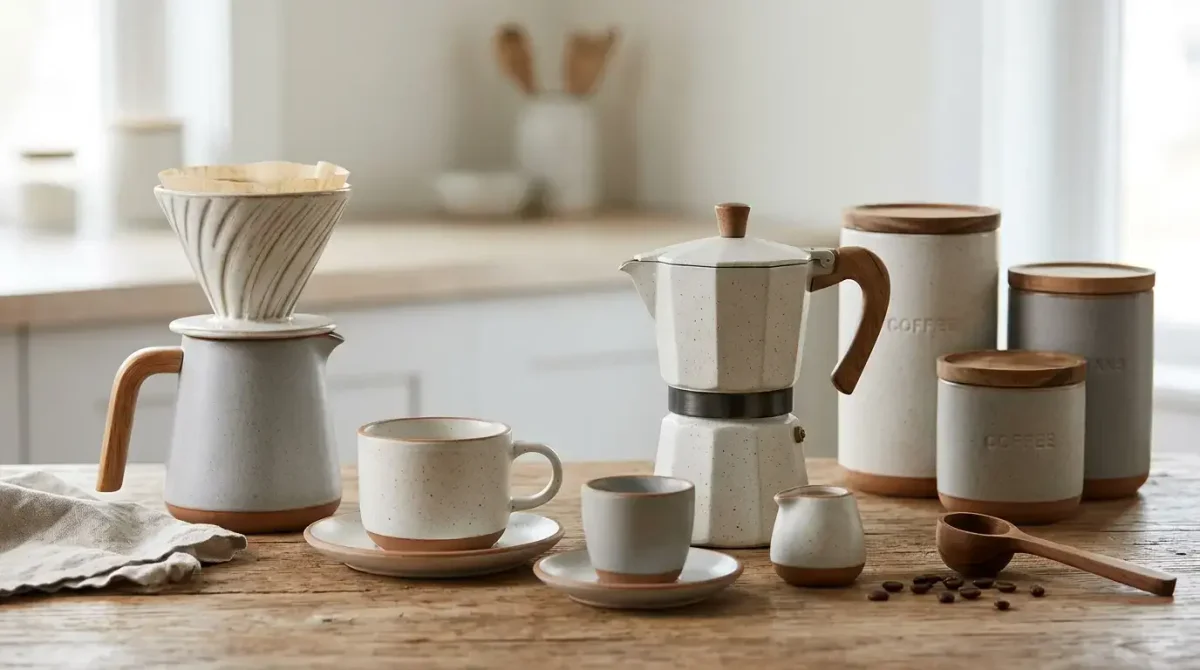
These preferences should be treated as selection guidelines rather than universal consumer behaviors.
For example, a kitchenware retailer may prioritize functional mugs that complement existing tableware, while a specialty gift store may allocate more shelf space to unusual coffee-inspired designs.
Use your existing sales performance, customer feedback, and target price range to determine which product direction deserves greater emphasis.
How to Build a Coordinated Ceramic Mug Collection
Give Each Mug a Clear Role in the Assortment
Adding more designs does not necessarily create a stronger product assortment. Each mug should offer a meaningful reason for customers to choose it.
A balanced collection may include:
- Core mugs: Practical designs intended for regular use.
- Statement mugs: Distinctive silhouettes or patterns that strengthen the collection’s visual identity.
- Gift-oriented mugs: Designs and packaging suited to gifting occasions.
- Complementary mugs: Products designed to coordinate with coffee servers, creamers, sugar bowls, or other tableware.
If several mugs share nearly identical functions, price positioning, and visual appeal, they may compete for the same customers without expanding the collection’s usefulness.
Prioritize meaningful differences in design, application, or price rather than introducing variations simply to increase SKU count.
Maintain Visual Consistency Without Making Every Mug Identical
A coordinated collection can share a common design language while allowing individual products to serve different purposes.
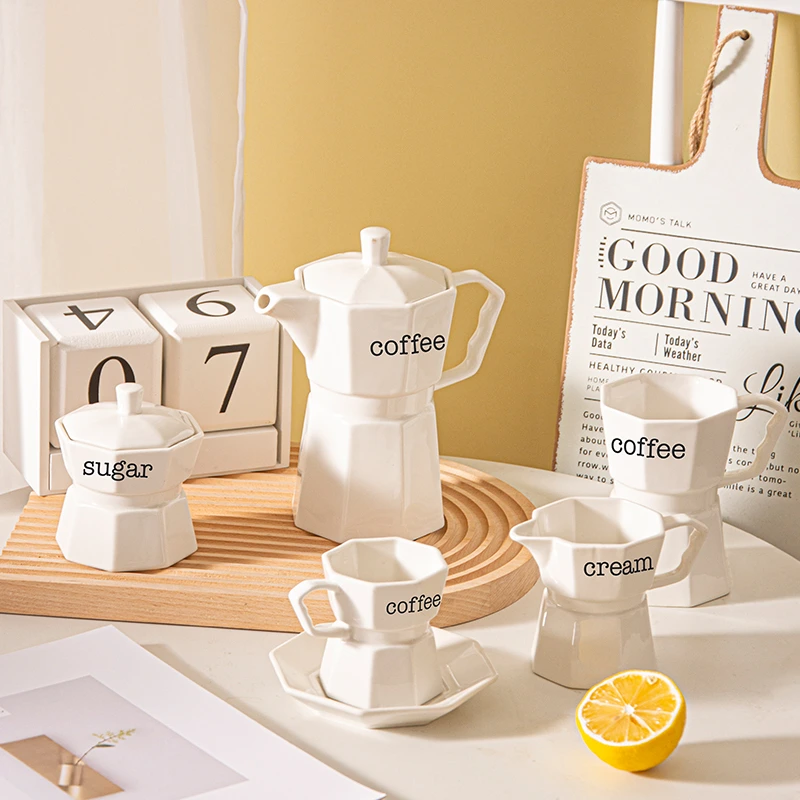
For example, our white geometric ceramic moka coffee set combines angular shapes, a clean white palette, and lettering across its serving pieces. This design direction can suit retailers developing contemporary coffee-themed collections.
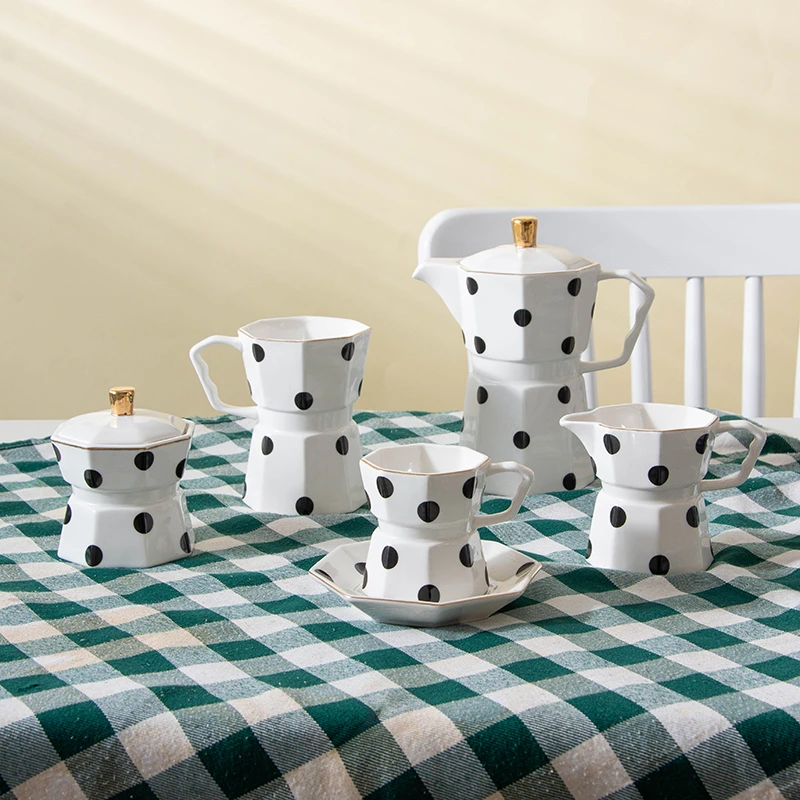
In contrast, the retro polka dot ceramic moka coffee set combines contrasting dots, gold-colored accents, and geometric forms, offering a more decorative direction for specialty retail displays.
[Visual suggestion 3 — Two coordinated ceramic moka coffee collections]
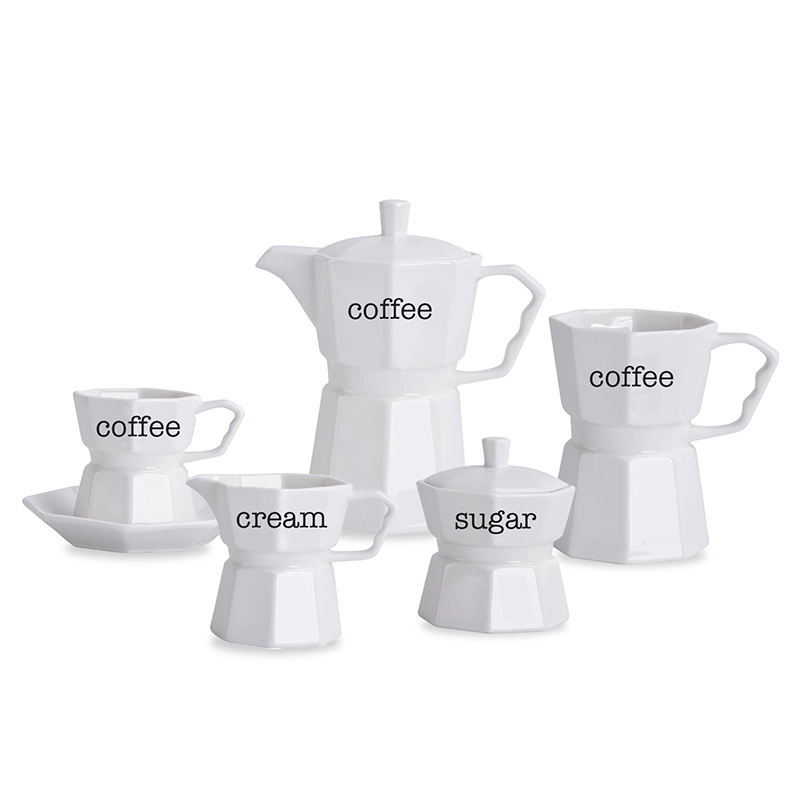
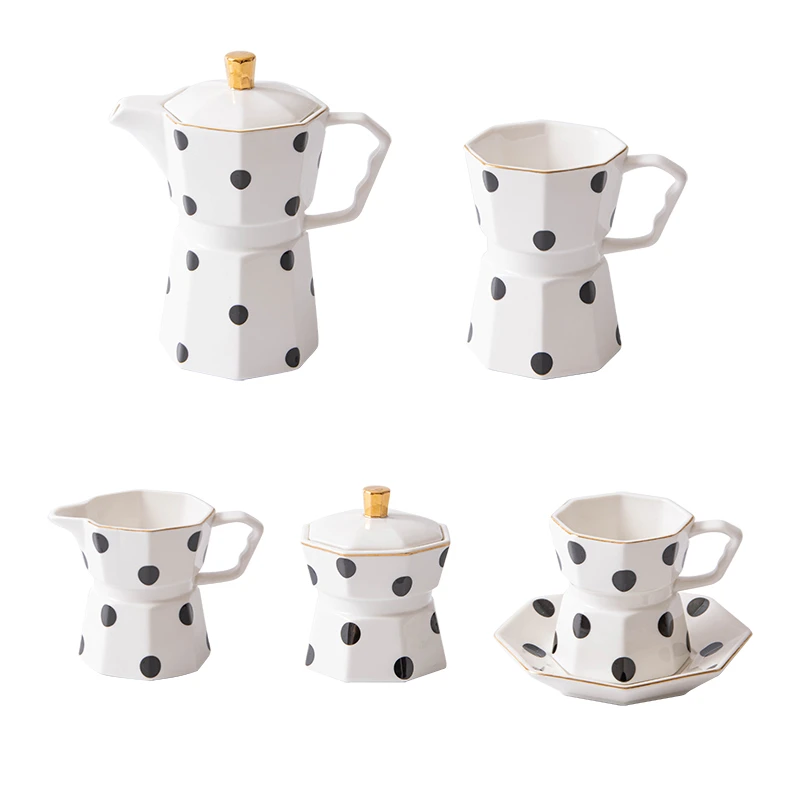
Both demonstrate how a shared design theme can connect different products without making every piece identical.
Before planning individual mug sales, gift bundles, or complete coffee sets, confirm which components and packaging configurations are available from the manufacturer.
Source Retail-Ready Ceramic Mugs with Kedali
As a ceramic manufacturer, Kedali supplies wholesale ceramic mugs and coordinated coffee collections for retailers, wholesalers, and brand owners.
Our customization services support product shapes, sizes, colors, patterns, finishes, branding, and packaging, subject to product-specific feasibility.
Buyers can explore OEM vs. ODM for ceramic cups to determine whether adapting an existing design or developing a new product better suits their retail strategy.
If you are sourcing ceramic moka mugs wholesale or developing a collection of custom ceramic mugs, share your target customers, preferred design direction, retail price range, and assortment requirements with Kedali to discuss suitable product and customization options.